




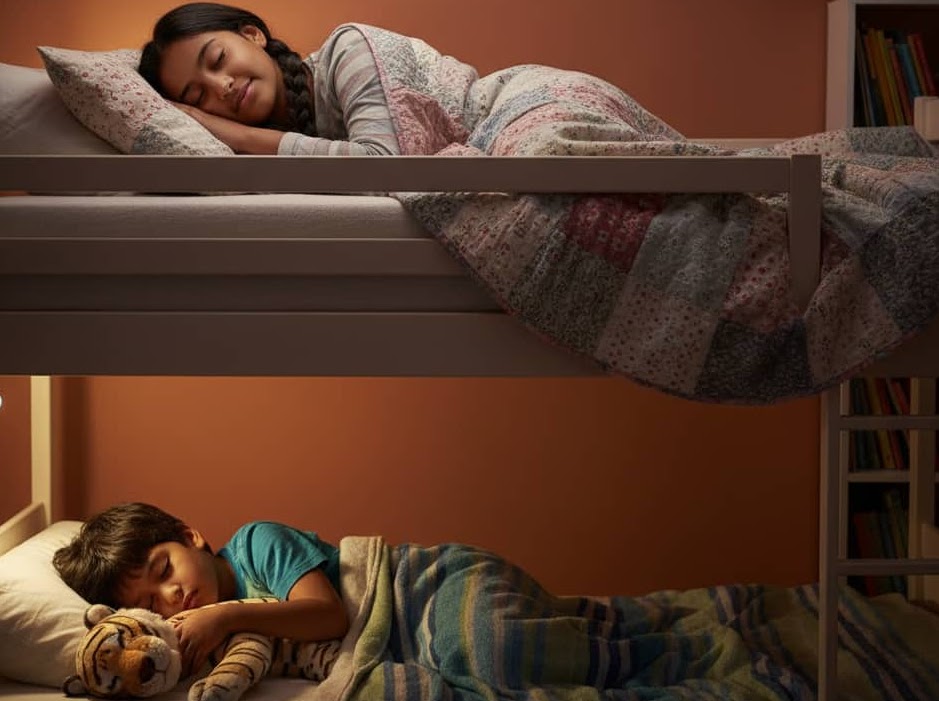
Sleep is one of the most powerful tools for a child’s growth, development, and emotional well-being. Good sleep habits can transform a child’s mood, behavior, and even academic performance. But sleep needs change dramatically from infancy to adolescence.
Infants (0–12 months)
Recommended Sleep: Newborns (0–3 months): 14–17 hours/day; Infants (4–11 months): 12–15 hours/day
- Establish a calming bedtime routine (bath, feeding, lullaby).
- Put baby down drowsy but awake to encourage self-soothing.
- Keep the sleep environment dark, quiet, and cool.
Toddlers (1–2 years)
Recommended Sleep: 11–14 hours/day (including naps)
- Stick to a consistent bedtime and wake-up time.
- Use a predictable routine (storytime, cuddles, soft music).
- Avoid screen time at least 1 hour before bed.
Preschoolers (3–5 years)
Recommended Sleep: 10–13 hours/day
- Maintain a consistent bedtime, even on weekends.
- Address nighttime fears with reassurance and a nightlight.
- Encourage physical activity during the day.
School-Age Children (6–12 years)
Recommended Sleep: 9–12 hours/night
- Create a tech-free zone in the bedroom.
- Help them wind down with quiet activities like reading.
- Keep bedtime consistent, even during school breaks.
Teenagers (13–18 years)
Recommended Sleep: 8–10 hours/night
- Encourage a regular sleep schedule, even on weekends.
- Limit screen time before bed—blue light disrupts melatonin.
- Help them manage homework and activities to avoid late nights.
General Sleep Hygiene Tips for All Ages
- Keep bedrooms cool, quiet, and dark.
- Avoid heavy meals and caffeine close to bedtime.
- Encourage daily physical activity (but not too close to bedtime).
- Be patient—sleep habits take time to build.
Disclaimer: YouBelong Pediatrics shares educational content to support families. This is not medical advice and shouldn’t replace care from a Licensed Doctor.