




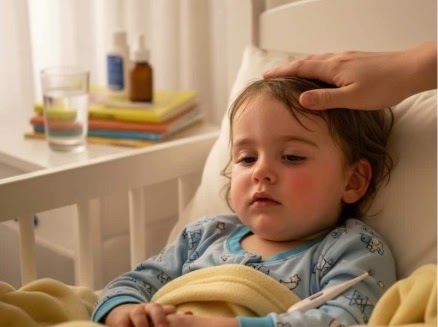
Few things can make parents feel as anxious as seeing their child with a fever. But let’s take a deep breath together—fever is usually a sign that your child’s body is doing exactly what it’s supposed to do: fighting off an infection.
What Is a Fever?
A fever is a normal response to infection or inflammation. When your child’s temperature rises, their body is working to make it harder for germs like bacteria and viruses to survive. Children often get fevers more easily than adults, especially when their immune system is encountering a new bug for the first time.
How Should I Check My Child’s Temperature?
For babies under 1 year old, a rectal thermometer gives the most accurate reading. This is especially important for infants under 2 months, when accuracy really matters. For older babies and children, other methods are fine.
Fever Myths—Let’s Set the Record Straight
Myth 1: Fever can cause brain damage.
Fever from infection almost never causes harm or brain damage. Even febrile seizures, while scary, do not cause lasting damage.
Myth 2: You should wake your sleeping child to check their temperature.
If your child is sleeping peacefully, let them rest—unless they are under 3 months old or have a medical condition that makes monitoring important.
Myth 3: Cold baths help bring down a fever.
Cold baths are uncomfortable and can actually make your child shiver, raising their temperature. Your goal isn’t to chase the number down, but to keep your child comfortable.
Myth 4: There’s a “danger number” that means you must rush to the ER.
Deciding whether to go to the ER depends on more than just the temperature. Pediatricians treat the child, not the number.
Myth 5: All fevers must be treated.
Not every fever needs medication. If your child is comfortable, drinking fluids, and playing, you may not need to treat the fever.
When to Call Your Pediatrician
- Infant under 3 months with any fever
- Fever lasting more than 5 days
- Fever above 104°F (40°C) in any age
- Child who looks very ill, is unusually drowsy, or is difficult to wake
- Signs of dehydration
Disclaimer: YouBelong Pediatrics shares educational content to support families. This is not medical advice and shouldn’t replace care from a Licensed Doctor.