
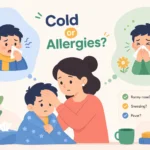


As the crisp air of fall rolls in, many families welcome the season with pumpkin patches and cozy sweaters. But for some children, autumn also brings sneezing, itchy eyes, and a runny nose that just won’t quit. So how can you tell if your child’s sniffles are just a cold—or something more?
Common Fall Allergy Triggers
- Ragweed pollen – A major trigger that can travel for miles in the wind.
- Mold spores – Found in damp leaves and soil, especially after rain.
- Dust mites – These can become more active when homes are closed up for cooler weather.
Symptoms to Watch For
While colds and allergies can look similar, allergy symptoms tend to linger and follow a pattern. Look for:
- Frequent sneezing
- Clear, watery nasal discharge
- Itchy or watery eyes
- Nasal congestion without fever
- Coughing, especially at night
- Dark circles under the eyes (“allergic shiners”)
If your child’s symptoms persist for more than 10 days, worsen outdoors, or seem to follow a seasonal pattern, allergies may be the cause.
Simple Relief Strategies
- Keep windows closed to prevent pollen from entering the home
- Use a HEPA filter in your HVAC system or a portable air purifier
- Change clothes and shower after outdoor play to remove allergens
- Wash bedding weekly in hot water to reduce dust mites
- Talk to your pediatrician about antihistamines or nasal sprays if symptoms persist
If your child is struggling with fall allergy symptoms, we’re here to help.
Disclaimer: YouBelong Pediatrics shares educational content to support families. This is not medical advice and shouldn’t replace care from a Licensed Doctor.