




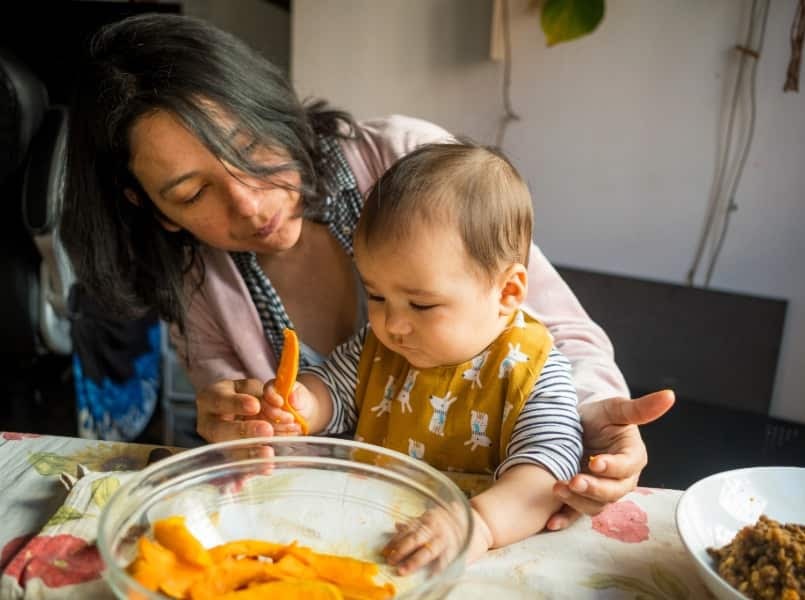
The journey from milk to meals is a beautiful milestone in your baby’s development. With a little guidance and patience, introducing solid foods can be a joyful and bonding experience for both you and your child.
When Is the Right Time?
Most babies are ready to begin trying solid foods around 6 months of age. Signs of readiness include:
- Sitting up with minimal support
- Showing interest in what others are eating
- Losing the tongue-thrust reflex (which pushes food out of the mouth)
- Being able to hold their head up steadily
First Foods: What to Offer
Start with single-ingredient, iron-rich foods like:
- Iron-fortified baby cereals (such as oatmeal or rice cereal)
- Pureed meats
- Mashed beans or lentils
Vegetables and fruits can follow, introduced one at a time to monitor for any allergic reactions.
Introducing Allergenic Foods
Research now supports introducing common allergenic foods early—around the same time as other solids—to help reduce the risk of food allergies. These include peanut, egg, milk, wheat, soy, fish, shellfish, sesame, and tree nuts. Always introduce these foods one at a time and in small amounts, watching closely for any signs of a reaction.
Tips for a Smooth Transition
- Make it fun: Sit together during meals and let your baby explore food with their hands.
- Be patient: It may take several tries before your baby accepts a new food.
- Stay consistent: Offer solids once a day at first, then gradually increase to two or three times daily.
- Use a cup: Around the same time solids are introduced, you can begin offering small sips of water in a training cup.
Disclaimer: YouBelong Pediatrics shares educational content to support families. This is not medical advice and shouldn’t replace care from a Licensed Doctor.