




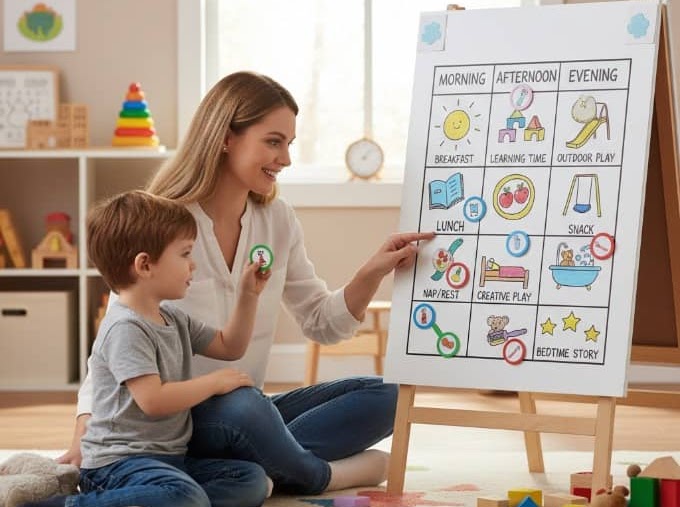
Preschoolers thrive on routine. A predictable daily rhythm helps young children feel secure, understand expectations, and develop healthy habits.
Why Routine Matters
Children between the ages of 3 and 5 are developing rapidly—physically, emotionally, and cognitively. Routines provide a comforting rhythm to the day, helping them understand time, build independence, and develop self-regulation skills. A consistent daily structure supports this growth by:
- Reducing anxiety and tantrums through predictability
- Encouraging independence and self-regulation
- Supporting healthy sleep and eating habits
- Creating opportunities for learning and social development
Key Components of a Balanced Routine
1. Morning Wake-Up and Hygiene: Start the day with a consistent wake-up time. Include simple hygiene tasks like brushing teeth, washing hands, and getting dressed.
2. Nutritious Meals and Snacks: Preschoolers benefit from three meals and two snacks spaced throughout the day. Avoid grazing between meals to support healthy digestion and mealtime habits.
3. Active Play: Include at least 60 minutes of active play daily—indoors or outdoors. Activities like running, climbing, dancing, or playing with balls help build strength, coordination, and confidence.
4. Learning and Creative Time: Set aside time for reading, puzzles, drawing, or imaginative play. These activities support language development, problem-solving, and creativity.
5. Quiet Time and Naps: Most preschoolers still need a midday nap or quiet time to recharge. Even if your child no longer naps, a calm period with books or soft music can help regulate emotions.
6. Family Connection: Include time for bonding—whether it’s a shared meal, a walk, or bedtime stories.
7. Consistent Bedtime Routine: A calming bedtime routine helps preschoolers wind down and sleep better. Aim for 10–13 hours of sleep in a 24-hour period.
Tips for Success
- Keep it flexible: Use routines as a guide, not a rigid schedule.
- Use visuals: Picture charts can help preschoolers understand and follow their daily flow.
- Involve your child: Let them help choose activities or set up their play space.
Disclaimer: YouBelong Pediatrics shares educational content to support families. This is not medical advice and shouldn’t replace care from a Licensed Doctor.